Difference between 4G and 3 G technology
On the surface, the difference between 3G and 4G is pretty simple. The “G” is short for generation, so 3G and 4G represent the third and fourth generations of mobile broadband Internet. As a rule, provided that you’re on the same carrier, a 4G connection will be faster than a 3G one. However, that doesn’t necessarily mean that a 4G network of one carrier will always be faster than the 3G network of another.
To be advertised as 3G, a network is required to meet a set of technical standards for speed and reliability, and must offer peak data transfer rates of at least 200 kilobits per second.
To be advertised as 4G, a network must offer peak data rates of at least 100 megabits per second for high mobility communication (users in cars, trains, etc.), and at least 1 Gigabit per second for low mobility communication (pedestrians and stationary users). On the surface, the difference between 3G and 4G is pretty simple. The “G” is short for generation, so 3G and 4G represent the third and fourth generations of mobile broadband Internet. As a rule, provided that you’re on the same carrier, a 4G connection will be faster than a 3G one. However, that doesn’t necessarily mean that a 4G network of one carrier will always be faster than the 3G network of another.
It’s also worth noting that each new generation of wireless broadband typically requires your cell phone provider to make upgrades on their towers, and therefore requires you to upgrade your phone so that it can send/receive signals through the new infrastructure. A 3G phone cannot communicate through a 4G network, but newer generations of phones are practically always designed to be backward compatible, so a 4G phone can communicate through a 3G or even 2G network.
When to go with 3G
- You might want to skip the 4G route and opt for a 3G phone if:
- Your area doesn’t have 4G network coverage.
- You don’t really use a lot of data-hungry applications.
social networking will work just fine on a 3G connection.
When to go with 4G
You might want to consider getting a 4G phone if:
- You want a newer model cell phone. 4G networks are becoming pretty standard, so most of the newest and most cutting-edge phones (Samsung Galaxy S3, iPhone 5, etc) are typically 4G phones.
- Your carrier has a solid 4g network in your area. If its there, you might as well take advantage of it.
- You use lots of data, and could benefit from faster speeds. If you like to watch YouTube on your way to work, stream Spotify everywhere you go, and you rely on a boatload of internet-connected applications to make it through the day, then go with a 4G connection. Having blazing-fast internet in your pocket at all times is useful, and data plans usually cost the same amount regardless of whether they’re on 3G or 4G.
3G presently is the world’s best connection method when it comes to mobile Internet. 3G is the abbreviation for third generation. It offers the download speed up to 3.1 Mbps (Mega bytes per second). but now there are so many varieties of 3G that now anywhere one can get an Internet speed of more than 400Kbps.
4G mobile networks are supposed to provide many value added features. When 4G will be connected to smartphones, tablets or computers, it can handle more data than 3G. A 4G system offers mobile ultra-broadband Internet access. For example: to laptops with USB wireless modems, smartphones and to other mobile devices. LTE is what most are calling 4G, but in reality it is just an advanced 3G standard that some call 3.9G. It uses a completely different radio technology. Although in many countries around the world, 4G is not yet released but definitely will get released very soon.
3 G Upload and Download speed
Upload – 5Mbps
Download – 100 Mbps
4 G Upload and Download speed
Upload – 500 Mbps
Download – 1Gbps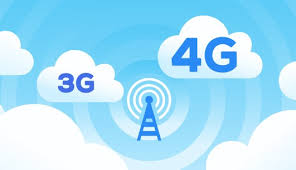







 IT BLOG